How a GoHighLevel Automation VA Builds High-Converting Funnels
A funnel is supposed to do one job: move a visitor from curious to committed with as little friction as possible. Inside GoHighLevel, the tools to build that exist natively, but the platform's drag-and-drop simplicity hides a real gap between a funnel that looks fine and a funnel that actually converts. Plenty of agencies have funnels live right now that are technically working and quietly underperforming, with nobody quite sure why the numbers aren't better.
A GoHighLevel automation VA closes that gap. Not just by assembling pages, but by building the conversion logic, automation, and follow-up underneath the funnel that most agency owners never have time to get right. This is what that actually looks like, from the first page a visitor sees to the automated sequence that follows after they convert.
Why Most GoHighLevel Funnels Underperform
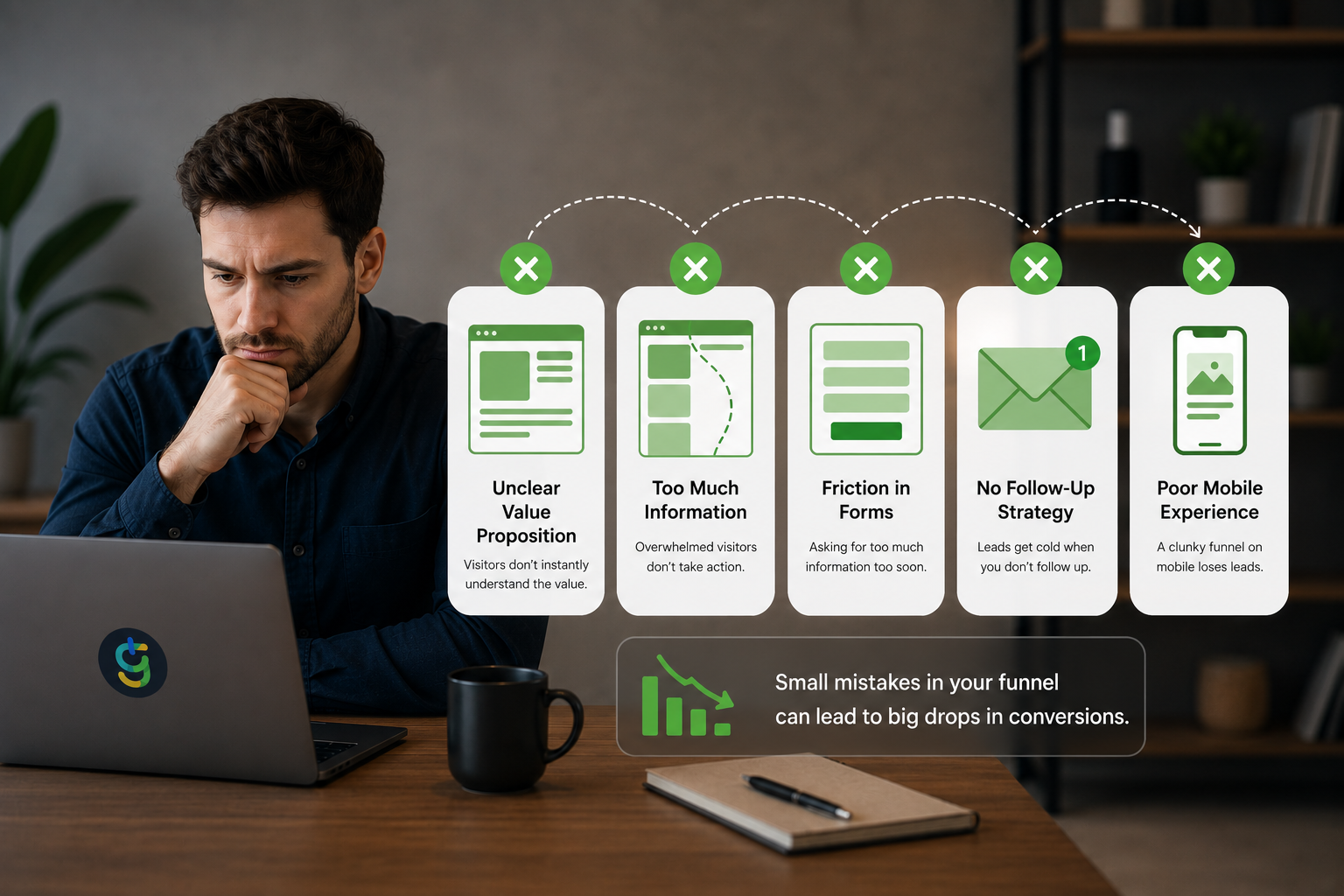
Funnels built from a default template, dropped online, and left alone tend to hit a ceiling fast. A few reasons show up again and again:
None of this means the offer is bad. It usually means the funnel around the offer isn't doing its job.
What a GoHighLevel Automation VA Actually Builds
Funnel Structure Built Around a Single Goal: Every page in the funnel is built to move a visitor toward one specific next step, whether that's booking a call, submitting a form, or completing a purchase, rather than presenting every possible option at once.
Custom Styling Beyond the Default Template: This is where CSS knowledge matters. A trained VA customizes forms, buttons, and page layout beyond GoHighLevel's default styling, so the funnel actually reflects your brand instead of looking like every other agency's default build.
Order Bumps and Upsells: For sales funnels, a well-placed order bump before checkout and a relevant upsell after purchase can meaningfully increase average order value, provided the logic and timing are built correctly rather than bolted on as an afterthought.
Immediate Automated Follow-Up: The moment a lead converts, automation should pick up instantly: a confirmation message, an SMS follow-up, or an email sequence that keeps the momentum going instead of letting a fresh lead go quiet while nobody follows up.
Pipeline and Tag Integration: Every conversion should automatically move the contact into the right pipeline stage and apply the right tags, so your team can see at a glance who just converted and what should happen next, without anyone manually updating records.
Testing Across Devices Before Launch: A funnel gets checked on both desktop and mobile, with every link and form tested, before real traffic is ever sent to it.
What Actually Makes a Funnel Convert Better
Beyond the technical build, a few specific decisions consistently separate a high-converting funnel from an average one.
Reducing Friction at Every Step: Every unnecessary field, extra click, or unclear instruction is a chance for a visitor to abandon the funnel. The best funnels ask for the minimum information needed at each stage, not everything up front.
Matching Message to Traffic Source: A funnel page should reflect the exact message a visitor just saw, whether that's an ad, an email, or a referral link. A mismatch between what someone clicked and what they land on is one of the fastest ways to lose them.
Building Trust Signals Into the Page: Testimonials, clear pricing where appropriate, and straightforward language about what happens next all reduce the hesitation that keeps visitors from converting.
Following Up Within Minutes, Not Hours: A funnel that captures a lead but doesn't trigger a response for hours loses much of its advantage. Immediate automated follow-up is often the difference between a lead who converts further down the funnel and one who's already moved on.
Illustrative Impact of a Well-Built Funnel
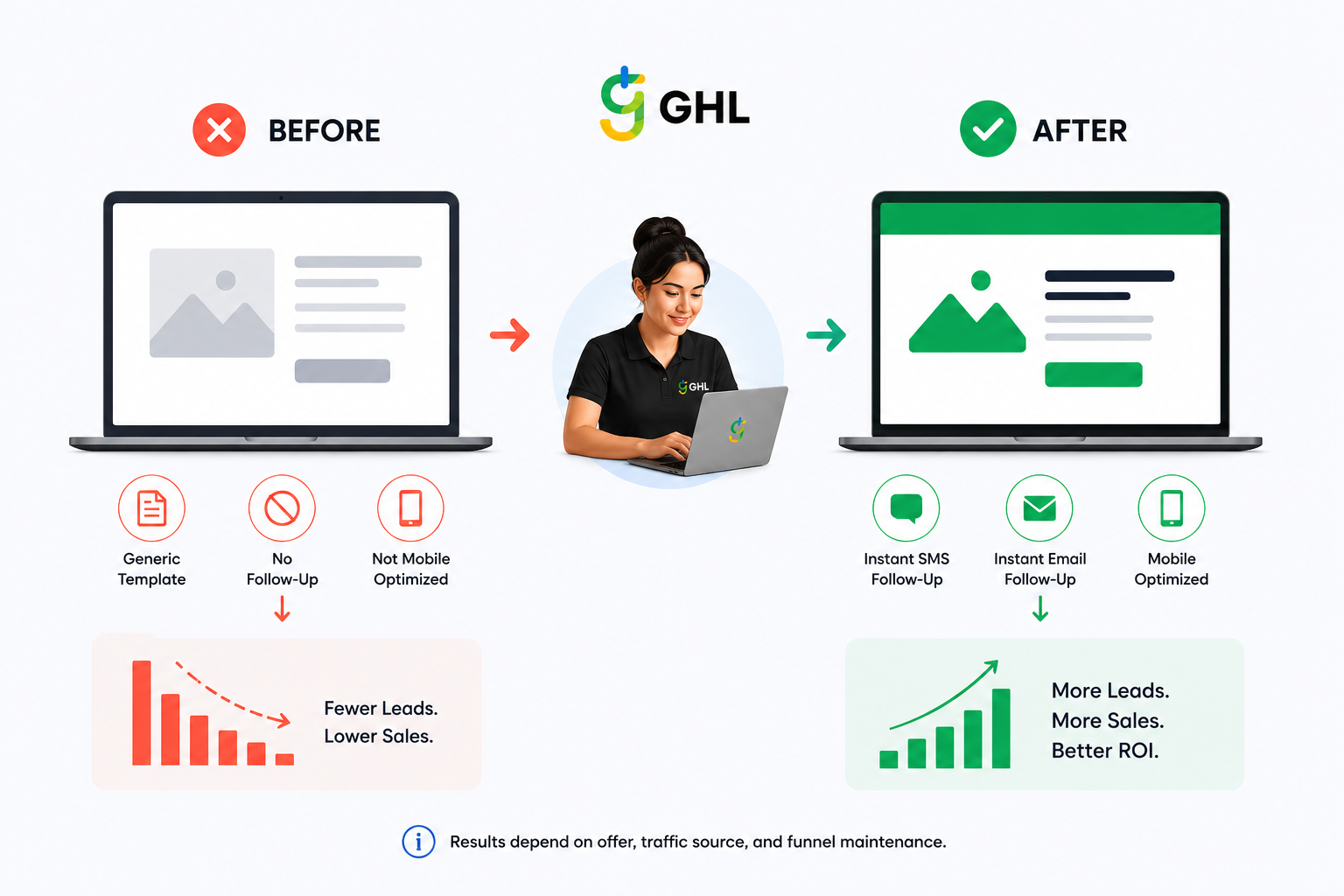
Illustrative example, not a guarantee: picture an agency running a funnel built from a default template, with generic copy, no automated follow-up, and no mobile testing. After a GoHighLevel automation VA rebuilds the funnel around a single clear goal, adds immediate SMS and email follow-up, and cleans up the mobile experience, that same agency could reasonably expect meaningfully more leads or sales from the same traffic, without spending anything more on ads. Actual results depend on the offer, the traffic source, and how well the funnel is maintained afterward.
What to Look for in a GoHighLevel Automation VA for Funnel Work
Not everyone who can drag a template onto a page can build a funnel that actually converts. If you're vetting candidates yourself, our list of technical interview questions for a GoHighLevel VA covers exactly what to ask about funnel-specific experience. At minimum, look for someone who can show a real funnel build with actual conversion logic, understands CSS well enough to customize beyond the default template, and treats the automation behind the funnel (follow-up, tagging, pipeline movement) as just as important as the pages themselves.
What Agency Owners Say
How Much Does This Cost?
Pricing depends on whether you need a single funnel built or ongoing funnel and automation support across your account. As a current example, GHL Plugins' dedicated VA program runs a flat $1,500 a month for 40 hours a week, with no long-term contract, covering funnel builds along with workflows, CRM cleanup, and the rest of your GoHighLevel needs. That sits within the roughly $1,200 to $2,500 a month range typical of dedicated, team-trained VA programs. If you're weighing this against other ways to get the work done, our guide on outsourcing GoHighLevel tasks break down the full range of options.
Common Funnel Mistakes That Quietly Hurt Conversions
Too many choices on one page: Multiple competing calls to action confuse visitors and reduce conversions on all of them.
No automated follow-up after conversion: A lead who converts and hears nothing for hours loses momentum fast.
Ignoring mobile rendering: Most funnel traffic is on a phone, and an untested mobile experience loses visitors before they see the offer.
Generic, unstyled pages: Default templates read as default templates, and that quietly undermines trust.
No tracking of drop-off points: Without visibility into where visitors leave, there's no way to know what to fix.
Getting Started
If you're not sure whether your current funnel needs a rebuild or just a few fixes, start by checking two things: how quickly a new lead gets a follow-up after converting, and how the funnel actually looks and behaves on a phone. Those two checks alone usually surface the highest-impact issues, and they're a good starting point before deciding whether to rebuild from scratch or optimize what's already there.
Frequently Asked Questions
Conclusion
A high-converting funnel isn't just a well-designed page. It's a page built around one clear goal, backed by automation that responds the moment someone converts and tested carefully before real traffic ever sees it. A GoHighLevel automation VA builds that entire system, not just the pages themselves, so the funnel keeps converting long after the initial build is done.