How to Find a GoHighLevel VA Who Understands Your Systems
You know what a bad hire looks like. They complete tasks but don't understand context. They execute instructions but miss dependencies. They build workflows that work until they don't, usually when clients are involved.
What you probably don't know is how to identify a systems thinker before you hire them.
Most hiring processes can't measure systems thinking. Resume reviews look at skills. Technical assessments look at task execution. Interviews look at communication. Nobody asks candidates to think about how one workflow affects everything downstream.
That's the gap. Finding the right VA means learning how to spot someone who naturally thinks in systems.
Why Technical Skills Don't Tell You What You Actually Need
You can find dozens of VAs who know GoHighLevel. They can build workflows, set up automations, manage lead funnels, and configure integrations. Their portfolios prove it.
Then you hire one and discover they built workflows that create duplicate leads. Or automations that trigger out of sequence. Or assignments with no fallback logic. The technical work looks complete until it runs into the real world.
This isn't always because they lack GoHighLevel knowledge. It's because they never thought about what happens when something breaks, what depends on each step, or how their work connects to your other systems.
A candidate who knows GoHighLevel but doesn't think systemically will create technical problems masquerading as operational solutions.
The Real Problem Behind Task Based Thinking
Most VAs are trained task-based. You assign work. They complete it. They wait for the next task.
This works fine for straightforward execution. Form building, simple automation, basic lead flow setup. When the work is isolated, task based thinking is efficient.
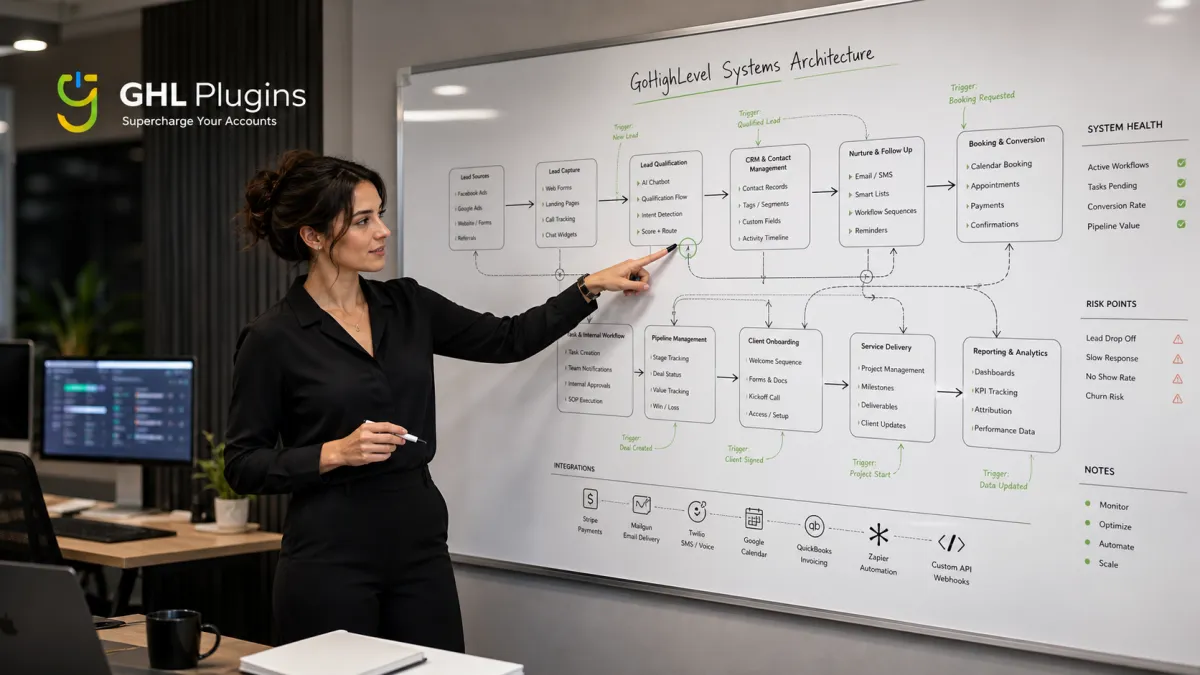
But GoHighLevel systems are rarely isolated. Lead capture connects to assignment. Assignment connects to follow up. Follow up connects to SMS coordination. One piece affects everything downstream.
A task-based VA builds lead forms without asking how they integrate with your CRM. They set up workflows without checking for conflicts with existing automations. They complete assignments without thinking about what happens if the primary assignee is unavailable.
A systems thinking VA asks these questions before starting work. They understand the full chain. They spot problems that task based thinking misses.
The Real Problem Behind Task-Based Thinking
Most VAs are trained task-based. You assign work. They complete it. They wait for the next task.
This works fine for straightforward execution. Form building, simple automation, basic lead flow setup. When the work is isolated, task-based thinking is efficient.
But GoHighLevel systems are rarely isolated. Lead capture connects to assignment. Assignment connects to follow-up. Follow up connects to SMS coordination. One piece affects everything downstream.
A task-based VA builds lead forms without asking how they integrate with your CRM. They set up workflows without checking for conflicts with existing automations. They complete assignments without thinking about what happens if the primary assignee is unavailable.
A systems thinking VA asks these questions before starting work. They understand the full chain. They spot problems that task-based thinking misses.
What Systems Thinking Actually Looks Like in Practice
Consider a typical lead management workflow. A form captures leads. Leads enter the CRM. Assignment happens. Follow up sequences begin.
A task based VA builds this as separate components. Form here. Workflow there. Sequences elsewhere. It works until something breaks.
A systems thinking VA approaches it entirely differently. Before building anything, they ask:
What happens if two forms are submitted seconds apart from the same person? How do we avoid duplicate entries? They then build dedup logic into the workflow trigger.
What if the assigned person is unavailable when a lead comes in? How does assignment logic handle this? They then add conditional logic with fallback assignment.
How do our SMS sequences coordinate with email follow up? Are they sending conflicting messages? They then review timing and messaging to ensure consistency.
What testing happens before this workflow goes live? They then outline testing scenarios and success criteria.
None of this is more complicated than basic task execution. It's the difference between completing a task and understanding the system that task operates within.
Why Agencies Trust GHL Plugins
Common Mistakes When Searching for System Thinking VAs
Most agencies make three critical errors during the evaluation process.
First, they assume technical depth equals systems thinking. A VA with advanced GoHighLevel knowledge might still think task-based. Technical skill and systems thinking are independent. You need both, but don't assume one produces the other.
Second, they ask closed questions during interviews. "Can you build workflows?" gets a yes or no. Open questions reveal thinking. "Walk me through how you'd approach our lead management system and what you'd want to understand first?" gets real insight.
Third, they hire before running a pilot project. You can't truly assess systems thinking from resumes or interviews. A small pilot project reveals how someone actually approaches work. Do they ask clarifying questions? Do they spot potential problems? Do they think about dependencies?
What This Means for Your Agency
Finding a systems thinking VA means finding someone who understands your operational ecosystem. They do not just complete tasks. They understand how one task affects everything downstream.
This means your workflows integrate smoothly. Your automations do not conflict. Your client handoffs are clean. Your systems stay maintainable as they grow.
The right VA sees problems before they cascade. They ask better questions. They communicate proactively. They take responsibility for operational quality.
This is what separates good VA support from better VA support. The difference is not personality or work ethic. It is how someone thinks about work itself.
If you are ready to evaluate candidates using a more structured approach, read our guide on How to Hire the Right GoHighLevel Virtual Assistant in 2026 and our deeper guide on What to Look for When Hiring a GoHighLevel Virtual Assistant.
Once you have the right person, the next step is making sure they can build and maintain systems properly. Our guide on How a GoHighLevel VA Builds High Converting Workflows explains what that looks like in practice.
And if you are ready to start looking for candidates, see Where Should You Actually Hire a GoHighLevel VA? for a breakdown of the main hiring options.